Hidden Fees, Shrinking Profits: How Casino Platforms Quietly Drain Your Bankroll (And Where to Find Better Deals)
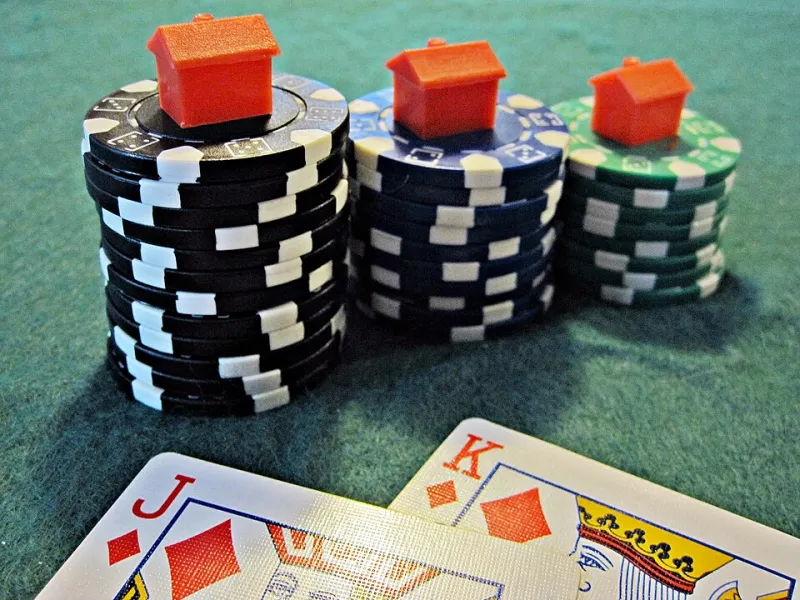
Photo: Images Money, CC BY 2.0, via Wikimedia Commons
Let's be honest about something most gambling sites won't put in their homepage banner: every platform takes money from you before you ever see a payout. It's not a scam — it's just the cost of doing business in a regulated, competitive industry. But the amount they take, and how they take it, varies wildly from one platform to the next. And for players who are serious about their bottom line, those differences are enormous.
This isn't about paranoia. It's about math. If you're wagering regularly on poker, live dealer games, or sports, understanding the fee structures you're operating under is just as important as knowing basic strategy or reading a line move. Ignore it and you're essentially playing with a blindfold on.
What Is Rake, and Why Should You Care?
In poker, rake is the percentage the house pulls from each pot — or charges per hand — in exchange for running the game. It's the foundational revenue model for virtually every card room, online or off. In live dealer casino games, the equivalent concept shows up as the house edge built into each game variant. In sports betting, it takes the form of the vig (or juice) embedded in the odds.
They're all the same idea: the platform gets paid regardless of who wins.
The problem isn't that these fees exist. The problem is that most players never actually calculate what they're surrendering over time. A 5% rake sounds minor. But run 200 hands a week at an average pot of $40, and you're looking at $400 monthly just in fees — before accounting for losses.
Poker Rooms: Where the Rake Gets Complicated Fast
Online poker rake typically ranges from 2.5% to 5% of each pot, usually capped somewhere between $1 and $5 depending on the stakes. That cap matters enormously. A $3 cap at a $1/$2 table hits much faster than the same cap at $5/$10, which means low-stakes players often pay a higher effective rake rate than high rollers.
Then there's the time charge model — common in higher-stakes games — where you pay a flat fee per half-hour of play. This can actually be more favorable for players who see a lot of hands per hour, but it penalizes anyone playing a slower, more selective style.
What most players miss: rakeback programs. These are essentially rebates on the rake you pay, and they can return anywhere from 20% to 40% of your gross rake contributions back into your account. Some platforms advertise this prominently. Others bury it in their VIP tiers. Before you commit to any poker room, find out exactly what their rakeback or rewards structure looks like — because two rooms with identical rake percentages can have very different true costs once you factor in what you get back.
Live Dealer Games: The Edge Hidden in the Rules
Live blackjack, baccarat, and roulette don't charge rake in the traditional sense. Instead, the house edge is baked directly into the game's rules. And here's where things get sneaky — because minor rule variations create massive differences in long-term cost.
Take blackjack. A game that pays 3:2 on a natural blackjack carries a house edge around 0.5% with basic strategy. Switch to a table that pays 6:5 — increasingly common in lower-limit live dealer rooms — and that edge jumps to over 1.4%. That's nearly three times the cost for what looks like the same game.
Baccarat's banker bet sits around 1.06% house edge, which is genuinely one of the better deals in the casino. But some platforms charge a 5% commission on banker wins, while others have moved to commission-free variants that recoup the difference through other rule tweaks. Neither is automatically better — you have to run the actual numbers.
Roulette is straightforward: American roulette (double zero) carries a 5.26% house edge. European single-zero roulette drops to 2.7%. If a platform only offers American roulette on its live dealer floor, that's a meaningful cost penalty you're absorbing every session.
Sports Betting Juice: The Fee Nobody Talks About Enough
In US sportsbooks, the standard vig is priced into -110 odds on both sides of a spread or total. That means you're risking $110 to win $100 — the book's cut is roughly 4.5% of every dollar wagered on a theoretical 50/50 market.
But shops don't all price the same way. Some books offer reduced juice lines at -105, cutting your effective fee nearly in half. Others push closer to -115 on certain markets, especially props and alternate lines. The difference between betting -105 and -115 consistently over a season isn't trivial — it's the margin that separates a break-even bettor from a losing one.
Shop the lines. Always. A half-point or a few cents in juice on every single bet compounds into real money over hundreds of wagers.
How to Calculate Your True Profitability
Here's a simple framework to figure out what you're actually keeping:
- Identify the fee structure — rake percentage, house edge percentage, or vig on your typical bets.
- Calculate gross volume — how much total money you're putting into action per month.
- Apply the fee rate — this is your minimum monthly cost, assuming zero skill edge.
- Subtract rakeback or rewards value — whatever the platform returns to you through bonuses, cashback, or comp points.
- The remainder is your true cost floor — what you need to overcome just to break even.
For example: a poker player running $8,000 in monthly rake at a platform with 30% rakeback is paying a net $5,600 in fees. The same player on a platform with 20% rakeback pays $6,400. That $800 monthly gap is real money — over a year, it's nearly $10,000.
What to Look for When Choosing a Platform
Not all platforms are upfront about their fee structures, but the information is usually findable if you know where to look. Before committing serious volume anywhere, check these specifics:
- Poker: Rake cap, rakeback percentage, VIP tier requirements, and whether rakeback is calculated on gross or net rake.
- Live dealer: Blackjack payout ratio (3:2 vs 6:5), baccarat commission structure, roulette wheel type.
- Sports betting: Standard line juice, availability of reduced-juice markets, and whether the platform offers reload bonuses that offset the vig.
At CasinoSbobet, we think transparency here isn't optional — it's a baseline. Players who understand what they're paying make smarter decisions, play longer, and actually enjoy the experience more. The goal isn't to hide the rake. It's to help you understand it well enough to minimize it.
The Bottom Line
The house always has an edge — that's not a secret, and it's not going away. But the size of that edge, and how much of it you can claw back through smart platform selection and rewards programs, is absolutely within your control. Most players never bother to calculate their true cost of play. The ones who do find that a few informed decisions at the platform level can add up to hundreds or even thousands of dollars in recovered value every year.
Bet bold, sure. But bet smart first — and that starts with knowing exactly what you're paying.