In-Play Betting: How Sharp Bettors Exploit the Window Before Sportsbooks Catch Up
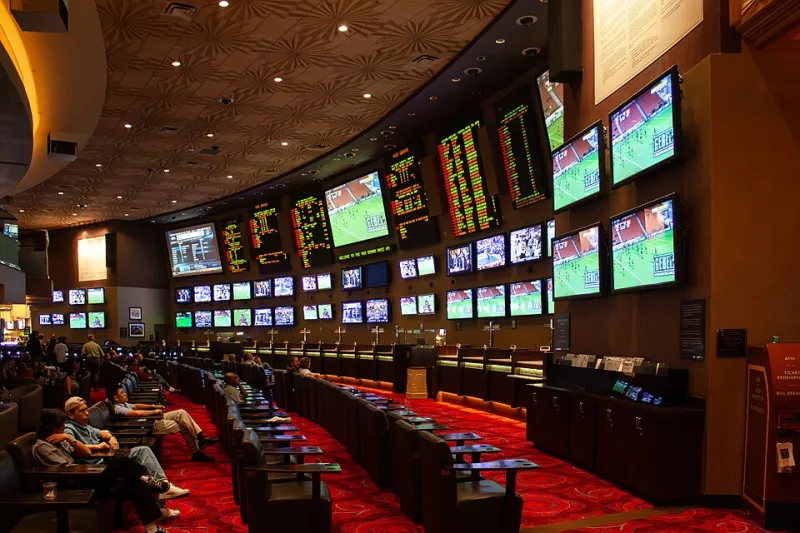
Photo: Chad Davis, CC BY 2.0, via Wikimedia Commons
There's a moment in every live sporting event — maybe it's the third quarter, a starting pitcher just left with a blister, or a star running back limped off the field on third down — where the sportsbook's algorithm hasn't quite caught up to what your eyes just saw. That gap, however brief, is where serious money gets made.
Live betting, also called in-play wagering, has exploded across US sportsbooks over the last few years. DraftKings, FanDuel, BetMGM, Caesars — they all offer real-time odds on everything from NFL drives to individual at-bats. But most casual bettors treat live lines the same way they treat pre-game lines: they scroll, they pick a side, they hope. That's not a strategy. That's gambling in the dark.
If you want to actually extract value from in-play markets, you need to understand how those lines are built — and more importantly, how they break.
How Live Odds Actually Work
Here's something most recreational bettors don't realize: sportsbooks don't have a team of traders manually adjusting every live line in real time. They're running automated pricing models — algorithms that recalculate odds based on game state, score, time remaining, possession, and a handful of other inputs. These models are sophisticated, but they're not perfect.
The algorithm is essentially solving a math problem every few seconds. It's asking: given everything happening right now, what's the most accurate probability of each outcome? When the inputs change — a turnover, an injury, a momentum swing — the model updates. But there's a lag. And that lag is your opportunity.
Sharp bettors call this the "stale line window." It's the brief period between when something meaningful happens on the field and when the book's model fully prices it in. For major events like NFL games, this window might be just a few seconds. For less-trafficked markets — say, a mid-week college basketball game or an early-round tennis match — it can stretch to 15 or 20 seconds. Sometimes longer.
The Real-World Scenarios That Create Value
Let's get specific, because theory only takes you so far.
Momentum shifts in basketball. NBA and college hoops are especially vulnerable to stale lines during runs. If a team goes on a 10-0 run in the third quarter and you're watching live, you can often bet the spread or total before the book adjusts for the psychological and tactical pressure now on the trailing team's coach to call a timeout and reset. The score moved, but the why behind the run — defensive intensity, fatigue, foul trouble — takes a second longer to register in the model.
Quarterback changes in football. This is a big one. A backup QB entering the game is a seismic event for a spread and a total. Books know this too, but they still have to recalculate. If you're watching the game and you see a starter go down before the book suspends or reprices the line, you may have a small window to grab value on the total dropping or the spread widening.
First-set collapse in tennis. Tennis in-play markets are notoriously slow to adjust. If a heavily favored player drops the first set on a break of serve, the live odds will shift — but often not enough to reflect the true psychological weight of that momentum change, especially in best-of-three formats. Sharp bettors who track player mental tendencies (Wimbledon collapse history, hardcourt vs. clay performance under pressure) can find edges here that the algorithm simply doesn't capture.
Timing Is Everything — Here's the Framework
Successful live bettors aren't just watching more closely. They're operating with a system. Here's a simplified version of the approach that separates consistent winners from the crowd:
1. Pre-identify your trigger events. Before the game starts, decide what in-game scenario would make a team's live odds genuinely mispriced. Write it down. "If Team A's center picks up two early fouls, I'm looking at Team B's live spread." Having a pre-planned trigger stops you from chasing random momentum and forces discipline.
2. Watch the game, not just the app. This sounds obvious, but most in-play bettors are staring at the odds screen waiting for a number to move. That's backwards. The value is in the event itself. Watch the game feed, then check the line. You want to react to reality, not to the book's reaction to reality.
3. Know your platform's speed. Not all sportsbooks update their live lines at the same pace. Some platforms are faster than others at suspending markets and repricing. Over time, you'll learn which books give you slightly more runway on certain sports. This is a real edge, and experienced bettors absolutely factor it in.
4. Bet smaller, bet faster. Live betting rewards quick decisions on smaller stakes more than it rewards big swings on slow ones. The window closes. A $50 bet placed in the right 10-second window beats a $500 bet placed after the line has already moved.
The Technology Gap You're Up Against
Let's be honest about something: the house has advantages you can't fully overcome with a smartphone and a sharp eye. The biggest US sportsbooks are backed by real-time data feeds from official league data providers. They're getting play-by-play input with millisecond precision. Their algorithms are calibrated by teams of quants.
But here's what those algorithms can't do well: they can't weigh qualitative context. They don't know that a certain NFL offensive coordinator has historically gone conservative after a turnover in the red zone. They don't know that a particular NBA point guard tends to disappear in the fourth quarter of road games when the crowd is loud. You can know those things. That's your edge.
Live betting isn't about beating the technology — it's about exploiting the gaps between what the algorithm sees and what a knowledgeable, observant bettor understands about the sport.
A Word on Bankroll Discipline in Live Markets
The speed of live betting is intoxicating. Lines are moving, the game is on, and it's easy to fire off five bets in a quarter without realizing you've already blown past your session limit. This is by design — sportsbooks know that in-play environments trigger impulsive behavior.
Set a hard limit on live bets per game before you start. Stick to your pre-identified trigger scenarios. And remember: the best in-play bettors pass on 80% of the "opportunities" they see. Patience isn't just a virtue in live betting. It's the whole strategy.
The game moves fast. Your edge comes from moving smarter.