The Illusion of Control: How Live Dealer Games Hijack Your Brain (And Your Bankroll)
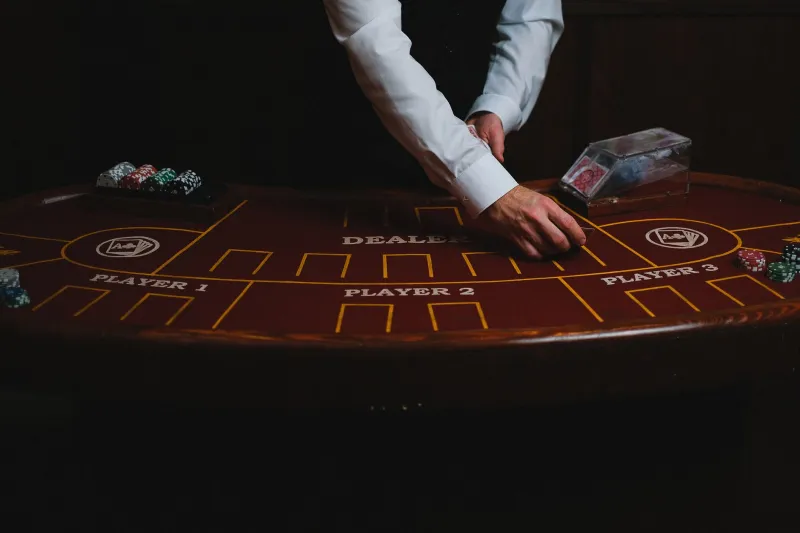
There's something undeniably different about watching a real person flip cards across a felt table in real time. The dealer smiles. The cards make that satisfying slap sound. You can see the shuffle happen right in front of you. It feels honest. It feels like you have a say in what happens next.
That feeling is one of the most expensive psychological tricks in the modern casino industry.
Live dealer games — streamed from studios in places like New Jersey, Michigan, or offshore facilities in Europe — have exploded in popularity among US players over the past few years. And the platforms pushing them aren't doing it out of generosity. They're doing it because players who sit at live tables tend to stay longer, bet more, and tilt harder when things go sideways. Understanding exactly why that happens is the first step toward not letting it happen to you.
The Math Hasn't Changed. Your Perception Has.
Let's start with the uncomfortable truth: the house edge on a live dealer blackjack game is identical to its RNG-based equivalent, assuming the same rules apply. Six-deck shoe, dealer stands on soft 17, standard payouts — you're looking at roughly 0.5% house edge either way if you play basic strategy perfectly. Live roulette with a single zero? Same 2.7% edge as any digital version.
The odds don't change because there's a human being sitting across from you on a video stream. The math is indifferent to atmosphere.
But your brain isn't indifferent to atmosphere. And that's where things get expensive.
The Control Illusion in Action
Psychologists call it the illusion of control — a cognitive bias first formally documented by researcher Ellen Langer in the 1970s. The idea is simple: humans consistently overestimate their ability to influence outcomes that are, in reality, entirely or largely determined by chance.
Live dealer games are practically engineered to trigger this bias. When you're playing RNG blackjack, the experience is stripped down and obviously mechanical. A button generates a card. It's hard to shake the feeling that you're just clicking through a slot machine with extra steps.
But in a live game? You're watching a person. You're reading their body language, even if it's meaningless. You're making decisions in real time while a clock ticks. You can chat in the sidebar. You might even develop a preference for certain dealers. All of that social context activates the parts of your brain that are wired for interaction — and interaction feels controllable in a way that clicking a button simply doesn't.
The result: you feel like your choices matter more. You feel sharper. You feel like you're playing rather than just gambling. And that feeling makes you more likely to stay at the table, chase losses, and justify bigger bets.
Gambler's Fallacy Gets Worse With a Live Feed
Here's another wrinkle. Live dealer games typically display a running history of recent outcomes — the last 20 roulette results, for example, color-coded red and black. RNG games do this too, but the effect is amplified in a live setting because the data feels more real.
When you're watching an actual roulette wheel spin and red has come up eight times in a row, something primal inside you screams that black is due. This is the gambler's fallacy — the mistaken belief that independent random events are somehow connected across time. The wheel has no memory. The cards have no memory. But your brain absolutely does, and it's terrible at separating pattern recognition from actual prediction.
The live format makes this worse because you're watching history unfold in real time. It feels like narrative. It feels like momentum. And momentum is a concept that exists in sports, in human performance — but not in a shuffled deck or a spinning wheel.
Why Slower Pace Doesn't Mean Safer Pace
One argument you'll hear in favor of live dealer games is that they're slower, so you lose money more gradually. There's a grain of truth here — live blackjack might run 40 to 60 hands per hour versus 200+ on an RNG table. Fewer decisions per hour does mean less exposure to the house edge over time.
But here's the counterpoint: session length. Players at live tables almost universally stay longer. The social engagement, the pacing, the feeling of being in a real environment — it all reduces the psychological friction that would otherwise make you close the browser and do something else. You might play twice as long at a live table, which can easily erase the advantage of a slower deal rate.
The net effect on your bankroll is often neutral at best, negative at worst.
When Live Dealer Is Actually Worth It
None of this means you should never touch a live dealer game. That would be a puritanical take, and it's not what we're about here at CasinoSbobet. The point isn't to strip all the fun out of gambling — it's to make sure you're spending your money consciously rather than getting manipulated into spending more than you intended.
So here's a simple framework for deciding when the live experience is worth the psychological premium:
Play live dealer when:
- You've set a hard session limit (time and money) before you start
- You're treating it as entertainment, the same way you'd budget for a night out
- You're playing a game where basic strategy meaningfully reduces the house edge and you know that strategy cold
- The live format genuinely makes the experience more enjoyable, not just more addictive
Stick to RNG when:
- You're grinding for volume and want to maximize hands per hour with optimal play
- You notice yourself making emotional decisions based on recent outcomes
- You're already tilted from a bad session and looking for a "better" environment to recover
- The live table minimums are significantly higher than what fits your bankroll
Recognize the Feeling, Then Decide
The most useful thing you can take away from all of this is simple awareness. The next time you sit down at a live blackjack or roulette table and feel that sense of heightened engagement — that feeling that this game is different, that you're more in control, that you can read the rhythm of the cards — recognize it for what it is.
It's not a competitive edge. It's a cognitive response to a carefully designed environment.
The dealer is friendly because friendly dealers keep players at the table longer. The chat feature exists because social engagement reduces the impulse to leave. The scoreboard of past results is there because pattern-seeking brains can't look away from it.
None of that is a conspiracy — it's just good product design from the casino's perspective. Your job as a bettor is to enjoy the product without letting the design work against you.
Bet bold, play smart. And know exactly what's pulling at your decision-making before it costs you a session you didn't budget for.