Lock In or Let It Ride: A Pro Bettor's Framework for Deciding When to Hedge a Live Wager
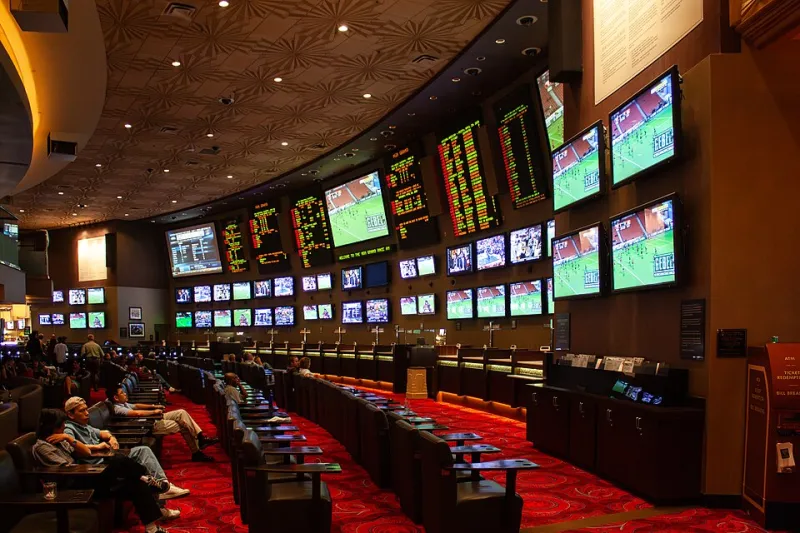
Photo: Chad Davis, CC BY 2.0, via Wikimedia Commons
Picture this: You bet the Kansas City Chiefs +3.5 on the moneyline pregame. It's the fourth quarter. The Chiefs are up by 10. Your ticket is looking beautiful — and then the other team scores. Suddenly it's a three-point game with four minutes left, and the sportsbook is offering you a live line on the other side.
Do you hedge? Do you hold? Do you split the difference?
This is the moment that separates bettors who think on their feet from bettors who react on emotion. And most people, under pressure, make the wrong call.
What Hedging Actually Is (And What It Isn't)
Hedging means placing a bet on the opposite side of your original wager to reduce risk or lock in a profit regardless of outcome. It's not the same as covering your losses — done correctly, it's a calculated financial decision that trades maximum upside for guaranteed return.
But here's where casual bettors get confused: hedging isn't always the right move. In fact, over-hedging is one of the most common ways that otherwise solid bettors drain their long-term expected value. The goal isn't to hedge every time you're nervous. The goal is to hedge when the math tells you to.
The Two Questions You Must Answer Before You Touch That Hedge Button
Before you place a single dollar on the other side of your original bet, you need honest answers to two questions:
1. What is the guaranteed profit if I hedge, versus my expected value if I hold?
This is a pure math problem. Let's say you placed a $200 futures bet on a team to win the Super Bowl at +500, meaning you're sitting on a potential $1,000 profit. The championship game is live, your team is up in the fourth quarter, and the sportsbook is offering the opponent at +120. A $400 hedge on the other team locks in roughly $280 profit either way. But if you hold and win, you're up $1,000.
The question isn't which outcome feels better. The question is whether the guaranteed $280 is worth surrendering the probability-weighted expected value of holding.
2. Has the probability of your original bet winning actually changed, or does it just feel that way?
This is the psychological trap. A close score in the fourth quarter feels scarier than it statistically is in many situations. If your team is up by a field goal with three minutes left and they have the ball, the win probability might still be 75%+. The sportsbook's live line will often misprice that tension — and if you hedge purely out of fear, you're giving up equity.
Building the Decision Tree
Here's the framework sharp bettors actually use when a bet goes sideways mid-game:
Step 1: Calculate Your Current Position Value
What would your ticket sell for right now if the sportsbook offered cash-out? This is your baseline. If the answer is "more than I paid but less than full payout," you're sitting on unrealized profit. That's a good problem to have — don't panic.
Step 2: Model the Hedge Amount
To lock in a guaranteed profit, use this formula:
Hedge Amount = (Original Bet × Original Odds) ÷ (Hedge Odds + 1)
This gives you the dollar amount to place on the opposing side to guarantee equal profit regardless of outcome. Run this number before you do anything else. Knowing the exact figure removes emotion from the equation.
Step 3: Assess the Line Value
Is the live line on the other side fair, or is the sportsbook overcharging for the hedge? Books know bettors panic in live situations and often shade lines accordingly. If the juice is brutal on the hedge side, your guaranteed profit shrinks fast. A hedge that looks clean at first glance might actually be a bad deal once you factor in the vig.
Step 4: Ask the Regret Question
This one's behavioral, not mathematical, but it matters. If your original bet loses and you didn't hedge, will you be able to absorb that loss within your bankroll management plan without it affecting future decisions? If yes, holding might be correct. If losing this bet would tilt your entire approach for the next week, hedging to protect your mental game is a legitimate strategic choice — not a weakness.
Real-World Scenarios
Scenario A — The Parlay That Grew Legs You hit four legs of a five-team parlay. The final game is live and your team is winning. The remaining payout is $800 on a $25 original bet. A hedge on the other side at even money costs you $400 but guarantees $400 profit no matter what.
Should you hedge? Almost certainly yes. The expected value of holding depends entirely on the live win probability, but a 16x return on a $25 bet is exceptional. Locking in $400 guaranteed is a rational, defensible decision.
Scenario B — The Moneyline Favorite Sweating It Out You bet $300 on a -200 moneyline favorite. They're winning but it's close. The live line on the underdog is +140. A full hedge would cost you more than your potential profit.
Should you hedge? Probably not. You're in a position where the juice on the hedge eats your entire margin. If your team's win probability is still above 65%, holding is the higher expected value play.
Scenario C — The Injury Changes Everything Your team's starting quarterback just left the game. This is the scenario where hedging is most clearly justified — not because of the score, but because the underlying probability of your original bet just changed materially. New information that shifts the true odds is one of the strongest signals to act.
The Professional Mindset on Hedging
Sharp bettors don't think about hedging as "giving up" on a bet. They think about it as managing a position — the same way a trader might reduce exposure on a stock that's moved in their favor. The original bet's job was to get you into a profitable position. The hedge's job is to extract value from that position at the right moment.
The mistake is treating every hedge as either pure cowardice or pure genius. Sometimes the math says lock it in. Sometimes it says ride it out. The only way to know the difference is to slow down, run the numbers, and make the decision before the adrenaline makes it for you.
That's what playing smart actually looks like.